

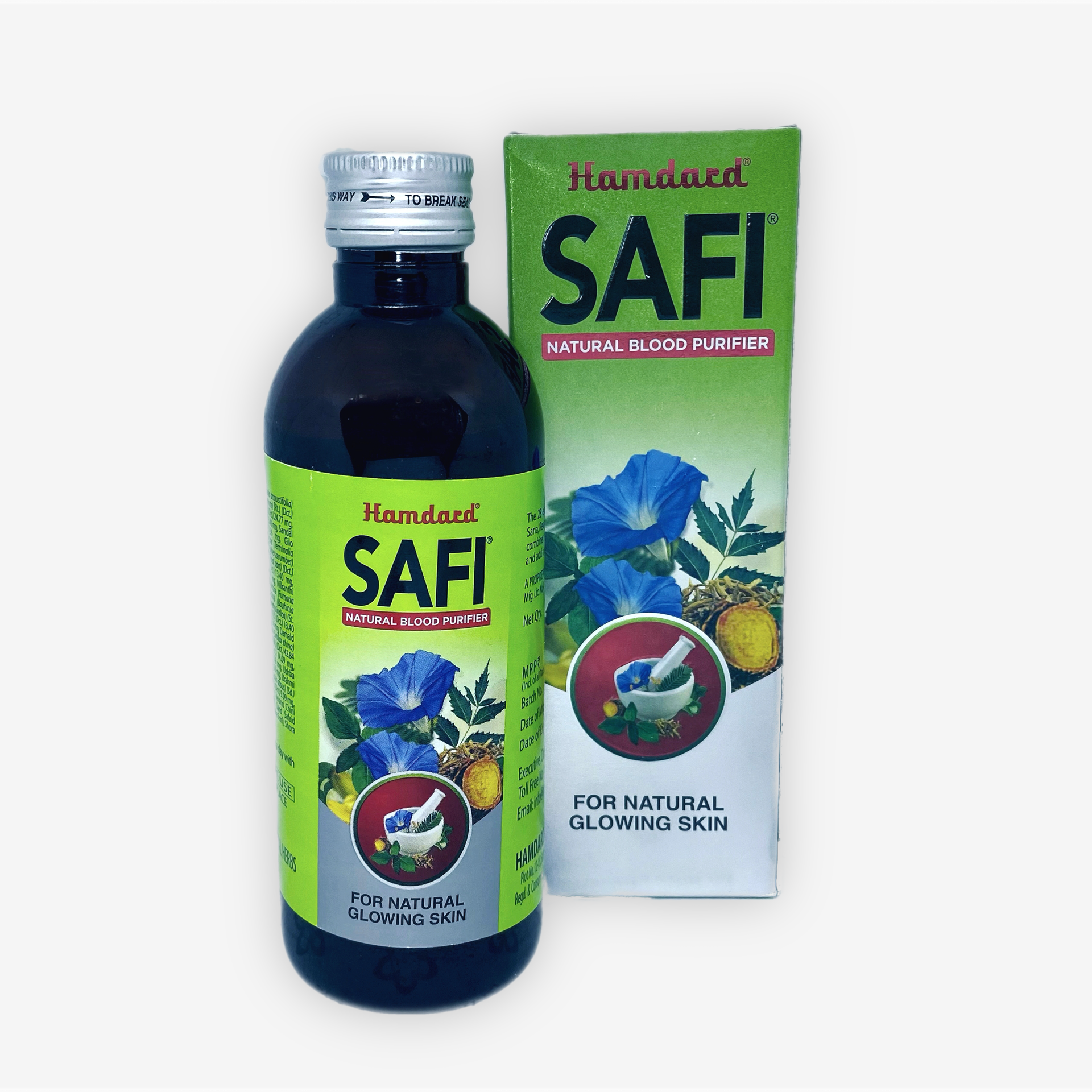
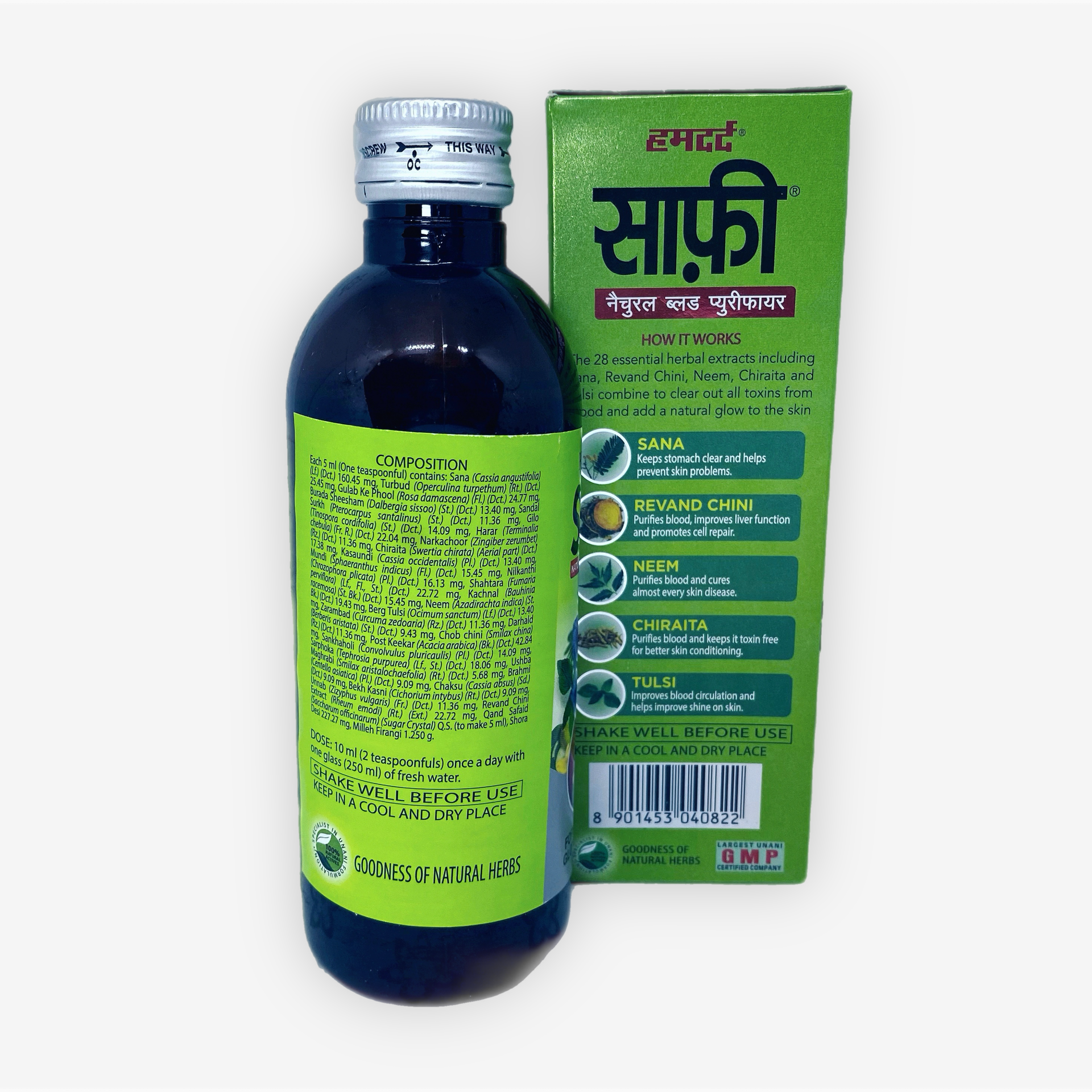
Safi Syrup Hamdard is a renowned herbal formulation designed to promote skin health and detoxification. This Ayurvedic syrup combines a blend of natural ingredients known for their blood-purifying and rejuvenating properties. Safi is particularly effective in addressing skin issues, helping to cleanse the blood and promote a clear complexion, making it an essential remedy for anyone seeking holistic skin care.
Key Benefits:
- Blood Purification: Safi Syrup effectively purifies the blood, helping to eliminate toxins and impurities that can lead to skin problems.
- Promotes Clear Skin: Aids in the treatment of acne, pimples, and other skin disorders, promoting a clearer and healthier complexion.
- Detoxification: Supports the body’s natural detoxification processes, helping to cleanse the liver and kidneys, which contributes to overall skin health.
- Enhances Immunity: Rich in natural antioxidants, Safi Syrup helps strengthen the immune system, providing resilience against infections and diseases.
Therapeutic Properties:
- Natural Ingredients: Safi is made from a blend of potent herbs and natural extracts, known for their healing properties, making it a safe and effective choice for skin care.
- Anti-Inflammatory Effects: The syrup possesses anti-inflammatory properties that can help soothe irritated skin and reduce redness and swelling.
- Senna (Cassia angustifolia)
- Turpeth (Operculina turpethum)
- Damask Rose (Rosa damascena)
- Rosewood (Dalbergia sissoo)
- Red Sandalwood (Pterocarpus santalinus)
- Guduchi (Tinospora cordifolia)
- Zingiber zerumbet (Zingiber zerumbet)
- Chirata (Swertia chirata)
- Western Cassia (Cassia occidentalis)
- Shravani (Sphaeranthus indicus)
- Chrozophora pliata (Chrozophora pliata)
- Fumitory (Fumaria perviflora)
- Bauhinia (Bauhinia racemosa)
- Neem (Azadirachta indica)
- Tulsi (Ocimum sanctum)
- Curcuma zedoria (Curcuma zedoria)
- Indian Barberry (Berberis aristata)
- Chinese Sarsaparilla (Smilax china)
- Arabian Acacia (Acacia arabica)
- Shankhapushpi (Convolvulus pluricaulis)
- Purple Tephrosia (Tephrosia purpurea)
- Sarsaparilla (Smilax aristalochaefolia)
- Brahmi (Bacopa monnieri)
- Cassia absus (Cassia absus)
- Common Chicory (Cichorium intybus)
- True Jujube (Ziziphus vulgaris)
- Rhubarb (Rheum emodi)
- Cane Sugar (Saccharum officinarum)
- Potassium Nitrate (Potassium nitrate)
- Magnesium Sulfate (Magnesium sulfate)
Safi Syrup is beneficial for individuals suffering from excess weight, chronic constipation, cold illnesses, feverish conditions, or blood intoxication.
It cleanses the gastrointestinal tract, normalises bowel motility, and restores its healthy microflora. Additionally, the preparation detoxifies the liver and expels parasites. It neutralises intoxication caused by alcohol consumption, synthetic medications, or smoking.
Safi syrup also aids in reducing the concentration of “harmful” cholesterol in the blood and stops bleeding associated with ulcers and haemorrhoids.
How to Use:
The preparation should be taken in courses lasting 21 days or as needed. The recommended dosage is 2 teaspoons (1 tablespoon) once a day, mixed with 250 ml of water.
For children aged 5 years and older: ½ teaspoon (2.5 ml) once a day; for teenagers: 1 teaspoon (5 ml) once a day.
It is not recommended for pregnant women and children under five years old, or for those with diabetes.
Safi syrup may be recommended in dietary regimens to create optimal nutritional conditions for the digestive system’s functioning. It can also be beneficial for skin rashes, acne, boils, measles, and itching.
Active Ingredients:
- Senna (Cassia angustifolia): A mild laxative that enhances bowel motility and prevents skin diseases.
- Acacia Arabica (Acacia arabica): Destroys pathogenic bacteria.
- Turpeth (Operculina turpethum): A gentle cleansing agent for the intestines, it provides a mild and safe laxative effect, alleviates constipation, aids in weight loss, expels parasites, disinfects wounds, reduces inflammation, and assists in cases of ascites, anaemia, early-stage liver diseases, heart conditions, gout, flatulence, and haemorrhoids.
- Damask Rose (Rosa damascena): Offers antispasmodic, toning, disinfecting, and choleretic effects; promotes the cleansing of the blood lymphatic system and improves its composition. It also has anti-inflammatory properties. A wonderful tonic for the central nervous system, as well as for the liver and heart. Effective for combating fatigue, apathy, muscle spasms, and in cases of jaundice, itching, and elevated body temperature. Often recommended for liver dysfunction and biliary dyskinesia, kidney stones, and gallbladder stones, as well as in cases of bronchial asthma and lung abscesses, digestive disorders, and nerve overloads. It aids in alleviating menstrual pain.
- Common Chicory (Cichorium intybus): Protects the liver and stimulates its functions. It is also a potent antioxidant capable of neutralising free radicals. Used in the treatment of gastrointestinal diseases and for the treatment of the liver and bladder. It has analgesic, diaphoretic, and diuretic effects. It facilitates the natural cleansing of the body from toxins and accelerates metabolism.
- Rhubarb (Rheum emodi): Reduces Pitta and inflammatory processes, cleanses the body of bile and ama (toxins). Acts as a laxative.
- Fumitory (Fumaria parviflora): Provides a mild laxative and diuretic effect. Actively used in the treatment of chronic kidney and liver diseases, aiding in the neutralisation of inflammatory processes in these organs. Prevents oxidative processes and the formation of free radicals. Strengthens the immune system, improves gastrointestinal function, and expels excess bile.
- Haritaki (Terminalia chebula): Treats lung and digestive system diseases, acts as a mild laxative, and enhances immunity; helps restore normal intestinal microflora. An antioxidant, it expels toxins and waste.
- Tulsi (Ocimum sanctum): Also known as sacred basil. It possesses significant healing power, normalises cholesterol and glucose levels in the blood, and is often used for diabetes treatment. It also has good anti-inflammatory properties, boosts immunity, and has an anti-stress effect.
- Neem (Azadirachta indica): One of the most popular remedies for blood purification and overall detoxification, helping to eliminate toxins and waste from the body. The cleansing properties of neem improve the condition of the body and various organs, purifying the skin and reducing illness. It is a very strong anthelmintic agent, effectively eliminating parasites in a short time. It serves as a natural antibiotic and antiseptic. Neem has rejuvenating effects, enhances immunity, and strengthens the body’s protective functions.
- Tephrosia Purpurea (Tephrosia purpurea): Eliminates parasites.
- Swertia Chirata (Swertia chirata): Many Ayurvedic practitioners value this plant for its effective influence in various diseases, including bloody vomiting, dropsy, pregnancy-related ailments, typhoid, unstable fever, skin lesions, and blood contamination. Like other bitter medicines, Swertia acts as a digestive aid, laxative, anthelmintic, and antipyretic. Its intake increases appetite, enhances digestion, reduces flatulence, and decreases bile secretion and stomach acidity. Many Indian practitioners recommend Swertia for staphylococcal infections. It is a very good remedy for chronic fevers and complications on the liver after their cessation, aiding recovery after fever. It helps with atonic dyspepsia, flatulence, loss of appetite, helminthiasis, and skin diseases.
- Guduchi (Tinospora cordifolia): Often referred to as amrita, meaning “divine nectar” in Sanskrit. This immunostimulant is an excellent antioxidant and is effective in cases of general weakness of the body. It reduces fever and detoxifies the body. It is a natural blood purifier. It increases energy and appetite. It helps with leg pain and bleeding, both internal and external.
- Sugarcane (Saccharum officinarum): A source of easily digestible carbohydrates, essential for the synthesis of ATP, the energy source in the body. It is necessary for brain function and metabolism in nerve cells, contributing to the generation of significant energy reserves in the body. It normalises digestion due to its high fibre content. It contains beneficial substances, including B vitamins, potassium, sodium, calcium, magnesium, phosphorus, iron, and zinc.